
fpc pcb handle vibrations and shocks
FPC (flexible printed circuit board) is a special type of circuit board that can bend and flex, making it ideal for use in small electronics. This flexibility allows them to adapt to curved or irregular spaces that cannot be easily accommodated by rigid PCBs, which can reduce the overall weight of the product. It also allows the board to better dissipate heat, which can prolong the life of the product.
There are several different types of fpc pcb, but they all share certain qualities that distinguish them from traditional PCBs. For example, they are usually thinner and more flexible than traditional PCBs, allowing them to withstand significant bending or flexing without suffering damage. In addition, they often feature a more rugged design that resists chemicals and other contaminants. They may also include multiple layers, and the layers can be connected to each other using either a direct solder or contact crimping.
A flexible PCB can also have internal and external circuitry, which can be important in certain applications. The external circuitry can be printed directly onto the surface of the board, which can save time and money, while still ensuring that all necessary components are connected correctly. A flexible circuit can also be designed to have minimal wiring, reducing the weight of the product while maintaining functionality and a clean look.
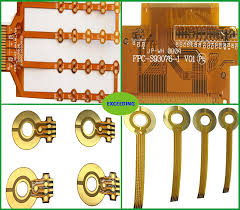
How do fpc pcb handle vibrations and shocks?
Another advantage of FPCs is that they are often much less expensive than traditional PCBs. They can be produced more quickly and can be used in a variety of ways, which makes them a great choice for a wide range of electronic devices. FPCs can be made from a wide range of materials, including metal, plastic, and even glass. They can also be laminated with other materials, such as polyimide or PTFE, for extra durability or to provide additional insulation.
The manufacturing process of an FPC starts with etching the copper to create a conductive pattern on the flexible insulating material. Then, the conductive pattern is covered with a layer of calendered copper foil and sealed with a protective cover. The insulated layer can be made from a variety of materials, such as polyimide, acrylamide fiber ester, or polyethylene terephthalate. In some cases, the insulating layer is coated with a silver or gold film for extra corrosion resistance.
There are two primary types of flexible circuit boards: single-sided and double-sided. A single-sided FPC has a conductive pattern that is chemically etched on one side of the insulating base, which can be made from polyimide or polyethylene terephthalate. The conductive pattern is then covered with a calendered copper foil to protect the copper from further oxidation and to ensure that the conductive pattern is properly aligned on both sides of the insulating layer. The conductive pattern is then finished with a metalized hole. The holes can be plated with copper, tin, or gold to meet various electrical requirements.
A multilayer FPC is a double-sided FR-4 or FR-5 flexible printed circuit board with more than three layers. It is also possible to have a hybrid flexible circuit that has both a multilayer and a single-sided version of the same board. This is particularly useful when the connections between the layers need to be made with a high level of reliability and performance.


+ There are no comments
Add yours