
printed circuit board assembly support augmented reality applications
In the realm of immersive technologies, Augmented Reality (AR) stands at the forefront, blurring the lines between the physical and digital worlds and revolutionizing how we perceive and interact with information. At the heart of AR applications lies Printed Circuit Board (PCB) assembly, a foundational technology that powers the devices and systems enabling immersive AR experiences. From headsets to smart glasses, handheld devices to industrial applications, PCB assembly plays a pivotal role in supporting the hardware infrastructure that drives AR innovation.
One of the primary ways pcb printed circuit board assembly supports Augmented Reality applications is through the integration of high-performance computing components into AR devices. These devices rely on sophisticated microprocessors, memory modules, and graphics processing units (GPUs) to render and display digital content seamlessly overlaid onto the user’s real-world environment. PCB assembly facilitates the miniaturization and integration of these components into compact and lightweight form factors, enabling AR devices to deliver immersive experiences without compromising on performance or portability.
Moreover, PCB assembly enables the integration of sensors and tracking systems essential for spatial mapping and gesture recognition in AR applications. From cameras and depth sensors to accelerometers and gyroscopes, PCBs provide the platform for integrating these sensors into AR devices, enabling precise tracking of the user’s movements and surroundings. This real-time spatial awareness enables AR applications to overlay digital content accurately onto the user’s physical environment, enhancing immersion and interaction in virtual experiences.
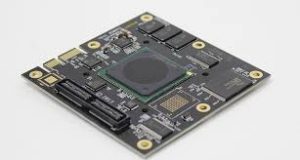
PCB printed circuit board assembly support augmented reality applications
Furthermore, PCB assembly supports the integration of display technologies such as microdisplays, light-emitting diodes (LEDs), and waveguides into AR devices, enabling the projection of digital content directly onto the user’s field of view. By optimizing circuit layouts for high-resolution displays and low-latency rendering, engineers can create AR devices that deliver crisp, responsive, and immersive visuals. Additionally, PCB assembly facilitates the integration of optical components such as lenses and mirrors that enable users to focus on virtual content overlaid onto their surroundings, enhancing the realism and usability of AR experiences.
Additionally, PCB assembly plays a crucial role in supporting the connectivity and communication capabilities of AR devices, enabling seamless integration with external devices, networks, and cloud services. By incorporating wireless communication modules such as Wi-Fi, Bluetooth, and 5G onto PCBs, AR devices can exchange data with smartphones, computers, and IoT devices, enabling content sharing, remote control, and collaborative experiences. This connectivity empowers AR applications to access cloud-based resources, such as streaming content, real-time updates, and spatial mapping data, enriching the user experience and enabling new forms of interaction and content delivery.
Moreover, PCB assembly enables the implementation of power management features that optimize energy usage and extend battery life in AR devices. By integrating power management circuits, voltage regulators, and energy-efficient components onto PCBs, engineers can maximize the efficiency of power delivery and minimize power consumption during operation. Additionally, PCB assembly supports the integration of rechargeable batteries and wireless charging capabilities, enabling AR devices to operate untethered for extended periods, thereby enhancing mobility and usability in immersive AR experiences.
In conclusion, PCB printed circuit board assembly serves as a foundational enabler of Augmented Reality applications, driving innovation, immersion, and interaction in virtual experiences. From enabling high-performance computing and display technologies to supporting spatial tracking, connectivity, and power management functionalities, PCB assembly plays a pivotal role in shaping the future of AR technology. As Augmented Reality continues to evolve and expand into new domains, the importance of PCB assembly as a key enabler of innovation and immersion in immersive experiences is poised to grow, transforming how we perceive and interact with the world around us.


+ There are no comments
Add yours