
Ceramic Printed Circuit Boards Handle High-Frequency Signals
The performance and reliability of high-frequency electronic systems are paramount in industries such as telecommunications and 5G infrastructure, where even the slightest signal degradation can lead to data loss, reduced system stability and failure. One of the most crucial aspects of maintaining optimum performance and reliability in these types of applications is efficient thermal management. That’s where ceramic PCBs come in. As a highly effective and durable material, these boards are ideal for use in electronic systems that operate at high frequencies, such as telecommunications and aerospace devices. In this article, we’ll discuss how ceramic PCBs handle high-frequency signals and why they’re a preferred choice for many high-performance applications.
The most popular type of ceramic printed circuit board is thick film copper, which has been patented as multi-layer thick film circuit technology. It consists of a ceramic base that’s coated with dielectric, gold or silver and then baked. This process prohibits copper from oxidation, which is a common problem with other PCB materials such as FR-4 or metal-clad circuit boards. This feature makes thick film ceramic circuits extremely reliable. Furthermore, it allows manufacturers to incorporate interchangeable conductors, semiconductors, resistors and electric capacitors onto the same board without compromising the integrity of the circuits.
As a highly insulating material, ceramics provide excellent electrical resistance and insulation, which is why they’re often used in applications where space is limited. In addition, the ceramic substrate allows for superior heat dissipation. This is a major advantage over conventional PCB materials such as FR-4 and metal-clad. The heightened thermal conductivity of ceramics also provides a significant benefit for high-frequency applications, as it prevents the components from overheating and ensures optimal performance.
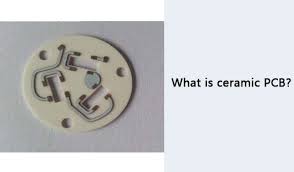
How Do Ceramic Printed Circuit Boards Handle High-Frequency Signals?
When choosing a ceramic PCB manufacturer, it’s important to evaluate their track record and expertise in handling complex applications. Look for a supplier with a strong understanding of the latest industry standards and a commitment to quality control. It should also have the equipment and production capabilities necessary to meet your specific needs, including fast turnaround times and a wide variety of customization options.
Another consideration is the type of ceramic PCB you need. There are several different types of ceramic PCBs available on the market today based on their manufacturing method. The three most widely used varieties are HTCC, LFCC and LAM.
HTCC is the most popular type of ceramic PCB, and it’s used when oxidation is a concern. This type of ceramic is baked at a temperature between 1000 and 1600 degrees Celsius in nitrogen gas. The copper layer can be deposited from 10 to 13 microns, which allows for high-frequency signals to be transmitted smoothly. It’s also extremely durable and abrasion resistant, making it suitable for a wide range of high-temperature applications.
LFCC is an alternative to HTCC that’s used when oxidation is deemed not to be a concern. The main difference between this and HTCC is that the copper layer is not plated, but rather, laminated onto the ceramic substrate with a thin film of gold or silver. This allows for a lower cost and greater flexibility in terms of design options. However, the laminated LFCC is less durable than HTCC.


+ There are no comments
Add yours